Michael Schmidt-Casdorff
- Flute
- , Germany
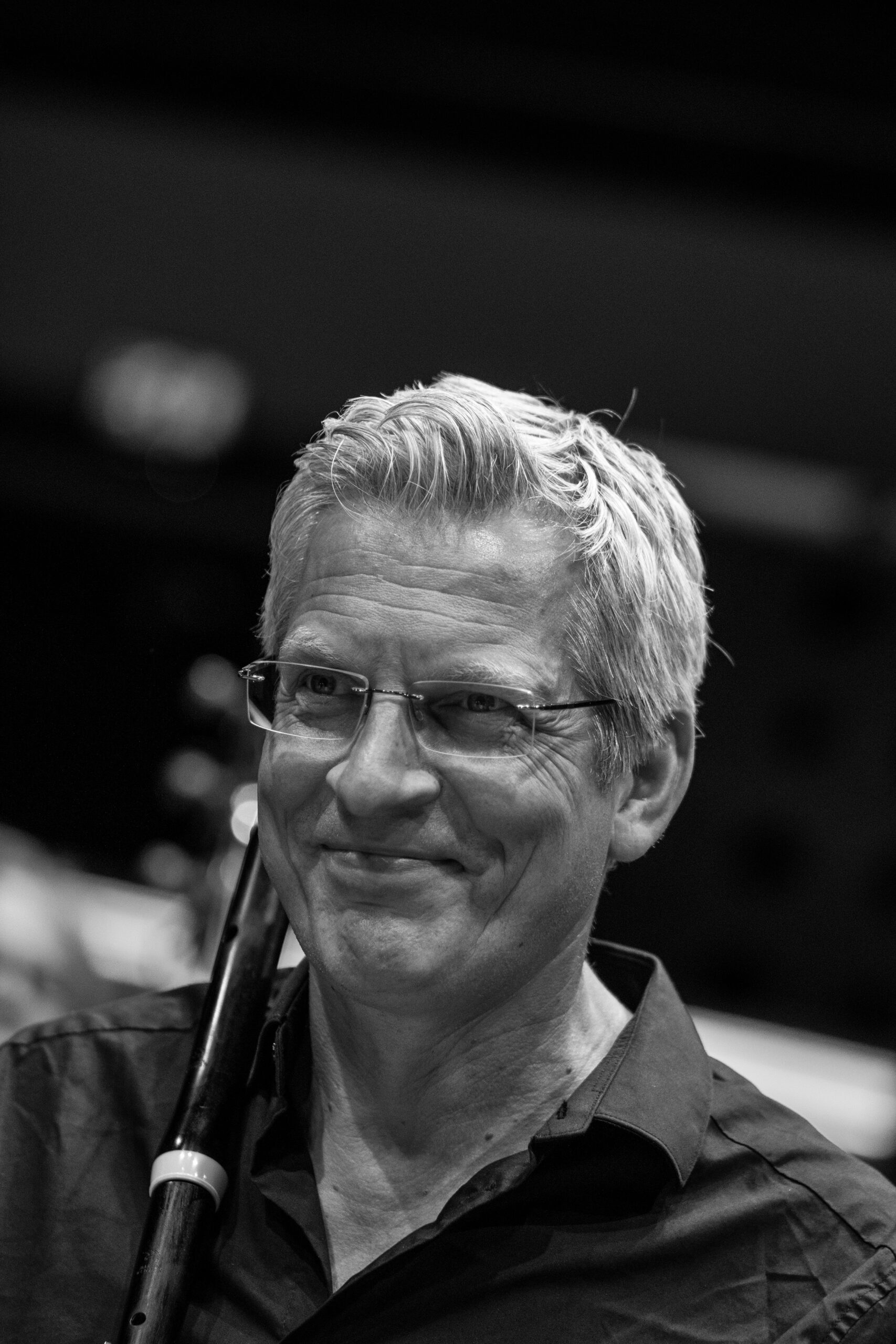
My name is Michael Schmidt-Casdorff and I have been principal flute with the Orchestra of the Eighteenth Century since 2008, where I succeeded my teacher, Konrad Hünteler. I also play in many other ensembles, such as the Balthasar Neumann Orchestra and Capella Augustina Brühl, and teach at the conservatoires in Essen (Germany) and Bydgoszcz (Poland).
I started playing the flute when I was eight. I was fascinated by the shiny silver instrument my father played. He was a music librarian in Dortmund and at weekends I often went with him to the library. Whilst he was working, I would browse through the sheet music with my flute in hand. Often, no one was there at all, so I could simply play from the sheet music. There was also a large record collection, and one day I discovered two LPs featuring Telemann’s 12 Solo Fantasias for traverso, performed by Hans Martin Linde and Barthold Kuijken. The distinctive and warm sound of a wooden flute was completely new to me and never left me. For my ‘konfirmation’, I was given a traverso as a present and taught myself to play it during my teenage years.
I studied the flute in Münster with Konrad Hünteler, who at the time was a flautist with the Orchestra of the Eighteenth Century and many other early music ensembles. As well as the modern flute, I studied the traverso with him. I was soon invited to play with various ensembles, including Concentus Musicus Wien with Alice and Nicolaus Harnoncourt. This has been a great learning experience and a source of inspiration for me.
Working with Frans Brüggen made an indelible impression on me. He was ‘mixing his little orchestra like a DJ’, yet he gave his musicians the freedom to express themselves. Even now that we’ve moved on without Frans, there remains a tremendous sense of mutual trust within the Orchestra of the Eighteenth Century, and with it, artistic freedom. This is what makes O18C truly unique to me.
I enjoy being a musician every single day. When you play the flute, your breath is the music; there’s no barrier. It’s so special to be able to share a love of music with colleagues and the audience. Every day I’m curious to see how it will sound; especially with period instruments, it’s always a surprise.